Croatia Travel Guide: Best Places to Visit by Region

Croatia explained region by region by a Split local: where to go, when to visit, how to get around and the mistakes visitors make most often.
By Ivana Parlov, Split · Last checked: November 2026
I have lived in Split my whole life. I am the third generation of my family in tourism, and I spent eight years working at an agency renting out villas and apartments. I honestly don't think there is a country I haven't met a guest from. This guide is what I would tell a friend coming to Croatia for the first time: how the country is divided, what each region offers, when to come and how to avoid the mistakes guests make most often.
In short
- First time in Croatia? In my opinion, Dalmatia is the best choice: Split, the islands, the Makarska Riviera and Dubrovnik are all within reach.
- The loveliest months are May, June and September: warm sea, fewer crowds, lower prices.
- For July and August, book your accommodation in winter, especially if you want a house with a pool.
- Driving? From 1 March 2027, Croatia plans to switch to barrier-free motorway tolls (the Crolibertas system).
- Buy ferry tickets online before you travel, not at the port.
- Don't arrive before check-in. In private accommodation it is usually 4 pm.
Contents
Why Croatia
Croatia is more than a postcard, even though the postcards are beautiful. It has the sea, the food and the nature, but it also has something that is hard to describe: a true Mediterranean feeling. You get to know it best if you blend in with the locals and their rhythm, not with the tourist version of the country.
For me, Croatia is going to buy fresh fish straight off the trawler at seven in the morning in a small fishing village. It is two neighbours arguing first thing in the morning and having coffee together an hour later. That temperament of ours is what gives all this beauty its charm.
How Croatia is divided
This is not the official administrative division but a travel one: the easiest way to understand Croatia and plan your holiday. Each of the six regions is different. The food is different, the architecture is different, even the way people speak is different. People from Split talk completely differently from people in Dubrovnik, and on the Makarska Riviera differently again. You won't understand islanders from Hvar when they speak fast. Luckily, English is widely spoken in tourist areas.
| Region | Best for | Beaches | Summer crowds | Airports |
|---|---|---|---|---|
| Istria | food and wine lovers, families driving | rocks and pebbles, landscaped bathing areas | moderate | Pula (alternative: Trieste, Italy) |
| Kvarner | families, island and nature lovers | pebbles, sand on Rab | moderate | Rijeka (on the island of Krk) |
| Dalmatia | first visits, islands, the sea | pebbles, in my view the best for swimming | heavy in July and August | Split, Zadar, Dubrovnik (Brač in summer, limited flights) |
| Lika & Gorski Kotar | lovers of unspoilt nature | lakes | heavy at Plitvice | Zadar, Zagreb, Rijeka |
| Zagreb & central Croatia | city breaks, Advent, castles | – | light | Zagreb |
| Slavonia | food, wine, peace and quiet | – | light | Osijek |
Istria
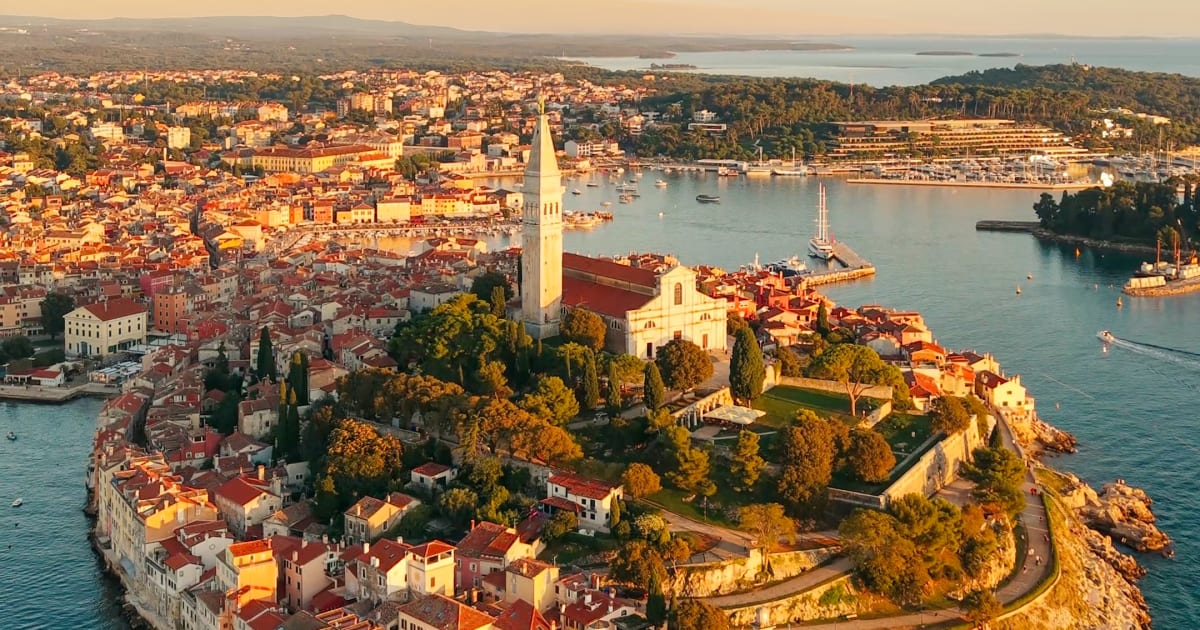
Istria is a blend of Italy and Croatia. Hilltop towns and stone houses look like Tuscany, and the coast is right there. It is known for its wines, local olive oil, truffles and food that could be a reason for the whole trip on its own. From Slovenia, Austria, Germany and Switzerland it is the closest part of the Croatian coast, so it is a great escape if you are coming by car and don't want a long drive.
Give the coast and the countryside five to seven days. In Pula you will find a Roman amphitheatre, one of the best preserved in the world. Rovinj is an old town on a peninsula, with narrow streets and sunsets. Poreč has the UNESCO-listed Euphrasian Basilica, and Motovun and Grožnjan are hilltop towns full of truffles and artists. Near Pula lies Brijuni National Park.
My tip: set aside a day for a buggy tour of the countryside and a winery visit. Kozlović winery is one of the places you have to see. The most common mistake is staying only on the coast, because the real Istria is twenty minutes inland.
What to eat: fuži pasta with truffles, Istrian maneštra (a hearty bean soup), prosciutto, with Malvazija and Teran wines.
We have villas with pools in Pula, Rovinj, Poreč and Tar. See villas in Istria & Kvarner
Kvarner
Kvarner is the bay between Istria and Dalmatia. Here you will find elegant Opatija, like something out of a fairytale, with Austro-Hungarian villas and a seafront promenade, lively Rijeka, and the islands. Krk is connected to the mainland by a bridge, so no ferry is needed: see Krk town, Vrbnik with its Žlahtina wine and the beach at Baška. Rab has sandy beaches at Lopar, shallow and great for small children, while Cres and Lošinj are about peace, nature and dolphins in the waters around Lošinj. Crikvenica, with its long beaches and promenade, is a family favourite.
Four to seven days is enough for Kvarner. Try Kvarner scampi, Krk prosciutto and Žlahtina. One common mistake: heading to Krk or Rab at noon on a summer Saturday, when queues on the bridge and at ferry ports can last hours.
We have villas in Crikvenica. See villas in Istria & Kvarner
Dalmatia
Dalmatia is what most people picture when they think of Croatia. It is the longest stretch of coast with the most islands. In my opinion this is where you find the most beautiful pebble beaches, especially on Vis, Brač, Hvar and the Makarska Riviera. We divide Dalmatia into three parts, and each one is different.
Northern Dalmatia: Zadar, Šibenik and around
The landscape here is stony, with a string of islands off the coast. Beaches are often rocky or fine pebble, but the sea is crystal clear. Zadar has the Sea Organ and the Greeting to the Sun, and for many the most beautiful sunset on the Adriatic. Nin is an old town on a tiny island with a sandy, shallow beach for children. Šibenik has the UNESCO-listed Cathedral of St James, and Primošten and Rogoznica are picturesque towns on peninsulas. Krka and Kornati national parks are close by.
My tip for a day at Krka: visit Skradin before the park. It's a win-win: Skradin is beautiful, and from there you enter the park by boat. For lunch I recommend Konoba Vinko in Konjevrate, a well-known family-run konoba (a traditional Dalmatian tavern) near the park. If you love wine, stop at Bibich winery for a tasting. It is one of the best-known wineries in Dalmatia, not far from Skradin.
See villas in Rogoznica and around Šibenik and Primošten.
Central Dalmatia: Split, the Makarska Riviera and the islands
This is my home and, for many, the heart of Dalmatia. Split is not a museum: Diocletian's Palace is not a castle but the old town itself, where people still live, work and drink their coffee. Trogir is a UNESCO town on a small island, twenty minutes from the airport. If you want peace and a villa with a pool close to the city, look at Kaštela and Podstrana. Omiš, at the mouth of the Cetina river, is known for rafting and ziplining.
Along the Makarska Riviera, below Biokovo mountain, you will find Brela, Baška Voda, Tučepi and Podgora. In my opinion the Riviera is most beautiful anywhere except Makarska itself. I love Baška Voda: it has a promenade and beaches a few steps from your door, and it is calmer than Makarska.
The islands are a story of their own:
- Brač has Zlatni Rat beach in Bol and quiet towns like Supetar. Villas on Brač
- Hvar has lavender, Stari Grad and Jelsa, and nightlife in Hvar town. Villas on Hvar
- Vis is one of the inhabited islands furthest from the mainland, and in my view that is why it has stayed the most authentic.
My favourite beach near Split: Stobreč, below Kavala.
Southern Dalmatia: Dubrovnik, Pelješac and the islands
The city walls, Lovrijenac fortress and Stradun: in my opinion Dubrovnik is worth seeing for anyone visiting Croatia for the first time. Dubrovnik is a small city and you don't need 15 days to see it. If you are staying in central Dalmatia it can be a fantastic day trip, but allow around three hours' drive each way from Split, longer in summer. You can, of course, also stay in the city itself or somewhere quieter nearby, such as Zaton. Cavtat and Konavle are the calmer side of the Dubrovnik area.
Pelješac is, for me, perfect: oysters in Ston, the Ston walls and Dingač wine. The Pelješac Bridge means you no longer cross a border to get there. For peace, nature and swimming there are Korčula, Mljet and the Elaphiti Islands.
What to eat in Dalmatia: peka (meat or octopus slow-cooked under an iron bell), pašticada, brudet (fish stew), soparnik, with Plavac Mali wine.
The most common mistake in Dalmatia is trying to see everything in a week. Pick a base, such as Split or the Makarska Riviera, and do day trips from there instead of moving every two days.
My three hidden gems of Dalmatia
- Vis, the island that stayed true to itself;
- The Makarska Riviera outside Makarska, for example Baška Voda;
- Pelješac: wine, oysters and peace.
Lika & Gorski Kotar
The inland area between Zagreb and the sea is for anyone who loves unspoilt nature. Tourism here hasn't reached the point where everything revolves around it, and the quality is high. This is where Croatia will surprise you. Many guests staying in Split, Zadar, Šibenik, Dubrovnik or even Istria for a week make a trip to Lika. If you are driving down the motorway, definitely stop.
Lika is home to Plitvice Lakes, Croatia's best-known national park and a UNESCO World Heritage Site. Nearby is Rastoke in Slunj, a village of watermills above waterfalls. For hiking and canyons there are Velebit and Paklenica National Park.
My Plitvice tip: from Zadar it takes about an hour and a half; from Šibenik allow closer to two hours, depending on the route and traffic. Plitvice is a must-see, but in high season you need patience: the crowds are big, and parking and finding lunch can be hard. Buy tickets online and arrive early in the morning. Don't treat it as a quick stop, as you need at least four to six hours to walk the lakes.
Gorski Kotar is often called Croatia's green heart: forests, lakes and fresh air just an hour's drive from the sea. It sits on the motorway between Zagreb and Rijeka, which makes it a perfect stop on the way to Kvarner or Istria:
- Fužine and Lake Bajer: walks around the lake, boat rides and Vrelo cave.
- Lake Lokvarsko: quiet trails by the water.
- Delnice: the largest town in Gorski Kotar and a good base for trips.
- Risnjak National Park: hiking through dense forest to the source of the Kupa river.
In summer it is pleasantly cool here while the coast is at its hottest. Try Lika potatoes, lamb and škripavac cheese, and in Gorski Kotar game and mushroom dishes.
Zagreb & central Croatia
Zagreb is a Central European city with Austro-Hungarian architecture, coffee houses and Dolac market, best visited in the morning. Walk around the Upper Town, take the funicular and visit the Museum of Broken Relationships. In winter Zagreb is famous for Advent, one of the most visited Christmas markets in Europe.
Nearby are Zagorje with Trakošćan Castle and thermal spas, baroque Varaždin and Samobor, famous for its custard slices (kremšnite). Try štrukli and turkey with mlinci.
If you are driving to the coast, a night in Zagreb breaks up the long journey and shows you another side of Croatia. One or two days are enough.
Slavonia
Slavonia is Croatia's east: plains, vineyards and big rivers. It is the Croatia few tourists get to know, with the biggest portions and the warmest hosts.
In Osijek, stroll through the baroque Tvrđa and along the Drava promenade. Kopački Rit Nature Park is one of the largest floodplain wetlands in Europe and a paradise for birdwatchers. Baranja has wine cellars and ethno villages such as Karanac, where you eat on family farms. Ilok has some of the oldest wine cellars in Croatia, Đakovo its cathedral and Lipizzaner stud farm, and Vukovar preserves an important part of Croatian history.
Try kulen (spicy sausage), fiš paprikaš (fish stew) and čobanac, with Graševina and Traminac wines. Give it two to four days: Slavonia is discovered slowly, at the table, not from the car.
When to visit Croatia
It depends on what you want. If you want to relax without big crowds and extreme heat, come in May, June or September. If you want the postcard Croatia we all see on social media, come in July and August.
Personally, I prefer June to July. May is beautiful because nature wakes up and Croatia gets a whole new look. July is lively, with music, concerts and events everywhere, but it is also extremely hot. Early season can be unpredictable: for every ten sunny days you may get a rainy one or two.
| Month | Sea (Split) | Air (max) | Crowds | Prices |
|---|---|---|---|---|
| May | ~18 °C | ~23 °C | light | lower |
| June | ~21 °C | ~28 °C | moderate | medium |
| July | ~24 °C | ~31 °C | heavy | highest |
| August | ~24 °C | ~31 °C | heaviest | highest |
| September | ~22 °C | ~26 °C | moderate | medium |
| October | ~20 °C | ~21 °C | light | lower |
Approximate monthly averages for Split; actual temperatures may vary.
When to book
For July and August, book as early as possible, ideally in winter. Houses with pools for larger groups and seafront villas go first. For June and September a few months ahead is usually enough, and there is still a good choice.
Local tip: check events with the tourist board. Every place in Croatia, from Motovun and Krk to Split and Dubrovnik, has its own tourist board. They work to bring local culture closer to guests and usually publish their summer events programme around May: concerts, plays, fishermen's nights, local produce fairs. If you book your stay in January, search for "Krk tourist board" or "Makarska tourist board" in May and check the schedule. That way you won't plan anything else for those days, and they are often the best evenings of the holiday.
Getting there and around
By plane
Split, Dubrovnik, Zadar, Pula, Rijeka, Zagreb and Osijek all have international airports, plus Brač in summer with a limited number of flights. From the UK there are plenty of direct flights to Split, Dubrovnik, Zadar and Pula, especially in summer. From North America you will usually fly with one connection via a major European hub. Istria is harder to reach by air (Trieste in Italy is an alternative), so most guests drive there.
Car or no car?
Whether you need a car depends on where you are going. If you are staying in central Split or Dubrovnik, you mostly won't need one, as parking is expensive and hard to find. In smaller places like Brela a car is practical. On Brač it makes exploring the island much easier: houses and apartments usually have parking, and there is plenty to see. For Vis, I advise many guests to come without a car, because taking one on the ferry in summer is expensive and the boats are full. For remote coves a car or scooter is handy, and you can rent one on the island.
Croatia drives on the right. UK and US driving licences are generally accepted for visitors; check your rental company's requirements before you travel.
Distance on the map is not driving time
Along the coast and on the islands, roads are narrow and winding, and slow in summer. Fifty kilometres on the coastal road can take an hour and a half. When planning day trips, look at the estimated driving time, not the kilometres, and allow for ferry queues.
Driving from elsewhere in Europe
| From | Route | Vignettes (approx. 2026) |
|---|---|---|
| Germany, Netherlands | Austria and Slovenia, or Austria and Hungary | Austria 10 days €12.80; Slovenia 7 days €16 |
| Poland | Czechia, Austria, Slovenia; or cheaper via Slovakia and Hungary | 10 days per country; Hungary ~€17 |
From 2027 the Austrian vignette is digital only.
Motorway tolls in Croatia
Croatia has no vignette; you pay tolls per section driven.
| Route (passenger car) | Toll |
|---|---|
| Zagreb – Split | €26.40 |
| Zagreb – Dubrovnik (to Čarapine, end of motorway) | €33.80 |
Source: Hrvatske autoceste (HAC), November 2026. The last stretch to Dubrovnik, over the Pelješac Bridge, is toll-free.
New from 2027: from 1 March 2027, Croatia plans to introduce a new electronic toll system, Crolibertas, with no traditional toll booths. Drivers of passenger cars will be able to use an ENC device or automatic number-plate recognition after registering their vehicle and payment method. Check the latest instructions on the official Crolibertas website before you travel.
Tip: avoid driving on Saturdays in July and August, when motorway traffic is at its heaviest.
Ferries to the islands
Most island ferries are run by Jadrolinija. The Split–Stari Grad (Hvar) car ferry takes about two hours.
My tip: if at all possible, buy your ticket online. Don't arrive, park and only then look for a ticket, because in summer the crowds and waiting times are crazy. Rules differ from port to port, so check in advance. In high season, arrive at the port at least an hour before departure.
Beaches in Croatia
Most Croatian beaches are pebble, which means crystal-clear water. In my opinion the most beautiful pebble beaches are on Vis, Brač, Hvar and the Makarska Riviera, and they are good for children. Around Zadar and Karlobag there are more rocky beaches, but the sea is just as clean.
Sandy beaches do exist, there are just fewer of them: in Nin near Zadar, at Lopar on Rab, Saplunara on Mljet, Sakarun on Dugi Otok and Lumbarda on Korčula.
- Beaches are part of the public maritime domain, so you can't reserve your own piece of the Croatian coast as a private beach. Some managed beaches have concessions for sunbeds and other services, but that doesn't mean a hotel or villa can keep other visitors out.
- Bring water shoes, as there are sea urchins on the rocks.
- Sunbeds and umbrellas cost money on managed beaches. A towel on the pebbles is free.
Croatia with kids
Croatia is a popular family destination: short drives between places, often shallow beaches, and towns that stay lively in the evening.
Families most often choose:
- the Makarska Riviera, for its long pebble beaches, promenades and ice cream;
- Crikvenica and Rab, for shallow beaches, with sand on Rab;
- Nin, for its sandy beach and shallow sea;
- Istria, for the short drive from central Europe and the Istralandia water park near Novigrad.
For an active day I recommend rafting on the Cetina river near Omiš: great fun for families and groups, followed by lunch in a local konoba. The minimum age depends on the organiser, water level and type of tour, so check when booking. With younger children Krka is often easier than Plitvice because the trails are shorter, though that depends on the route, the heat and the children's age.
For families with small children, a house with a pool is often more practical than a hotel. The kids swim whenever they want, and the parents get peace and their own kitchen.
How much does a holiday in Croatia cost?
Croatia is no longer a cheap destination, but you can still do well if you know where to go.
| Item | Price (approx.) |
|---|---|
| Espresso | ~€2 (more on seafront promenades and in Dubrovnik) |
| Beer 0.5 l in a café | €4–6 |
| Main course in a konoba | €15–17 |
| Seafood dinner for two | €50–90 |
| Water 0.33 l in a shop | €1–1.50 |
| Plitvice, summer | €40 (June–August until 4 pm, September until 3 pm), then €25 |
| Krka, June–September 2027 | €40, after 3 pm €30; boat from Skradin included (official 2027 price list) |
Approximate prices, checked November 2026. Park ticket prices depend on entry time, so check the current price list before buying.
Tourist tax is charged per person per night, and the amount depends on the place and season. In private accommodation it is often included in the price, but check with the owner before booking.
Local money-saving tips
- Have a coffee on the Riva, but don't have lunch there. I understand that in Rome you want to sit by the Pantheon. The restaurants on Split's Riva are good, but you pay for the location. In the narrow streets of the old town, the kale as we call them, you will eat just as well and save noticeably over a week.
- Ask your host. When you book private accommodation, ask the owner where to eat well on your budget, for a family or a group of friends. It is the best tip you can get.
- Come in June or September. Accommodation is cheaper and the sea is warm.
- Buy afternoon tickets for the national parks, when they are cheaper and less crowded.
Where to stay: villa, holiday home or apartment
Most visitors to Croatia stay in private accommodation: villas, holiday homes and apartments. Unlike in many countries, private rentals here are often run by the owners themselves, who live nearby and know the area best.
- Villa or house with a pool: for families and groups of friends. Your own pool, terrace, kitchen and privacy.
- Apartment: for couples and smaller groups, often by the beach or in town.
- Hotel: practical for a short city stay, with reception and breakfast.
Transparency: Croatia Premium Stay is a platform where villas and apartments are listed by their owners and local property managers. Guests communicate and book with them directly, with no booking commission. The personal recommendations of places, beaches and konobas in this guide are not paid for.
Browse villas & apartments in Croatia
National parks and day trips
| Park or trip | Region | Why go |
|---|---|---|
| Plitvice Lakes | Lika | 16 lakes and waterfalls, UNESCO |
| Krka | Šibenik | waterfalls, Skradin, boat to Skradinski Buk |
| Risnjak | Gorski Kotar | forests and the source of the Kupa |
| Kornati | northern Dalmatia | archipelago, boat trip |
| Brijuni | Istria | islands off Pula |
| Mljet | southern Dalmatia | lakes and forest |
| Paklenica | Velebit | canyons and hiking |
| Cetina rafting | Omiš | fun for families and groups |
| Buggy tour & wineries | Istria | countryside and Kozlović winery |
| Bibich winery tasting | Šibenik | wine and food near Skradin |
My pick: rafting on the Cetina. You can go with children, friends or as a team-building day. Top fun, lots of laughter, and afterwards you eat in a local konoba.
Food and wine by region
| Region | What to try |
|---|---|
| Istria | truffles, fuži, maneštra, olive oil, Malvazija, Teran |
| Kvarner | Kvarner scampi, Krk prosciutto, Žlahtina |
| Dalmatia | peka, pašticada, brudet, soparnik, Plavac Mali |
| Pelješac | Ston oysters, Dingač |
| Lika & Gorski Kotar | Lika potatoes, lamb, škripavac cheese, game, mushrooms |
| Zagreb | štrukli, turkey with mlinci |
| Slavonia | kulen, fiš paprikaš, čobanac, Graševina |
A konoba is a traditional Croatian tavern, often family-run, with home cooking and local wine. If you want to eat like a local, look for one.
My Dalmatian picks: Konoba Vinko in Konjevrate for home cooking, and a wine tasting at Bibich winery near Skradin.
The most common mistake: arriving before check-in
The biggest mistake I see, from my years in rentals, is arriving at the accommodation before check-in.
Hotels often have earlier check-in, but in private accommodation check-in is usually at 4 pm and check-out at 10 am. In between, guests change over and the cleaners get the house ready. The owner isn't refusing an early arrival because they don't want you; it is simply not possible: the previous guests are still in the car park and cleaning takes time.
If you turn up at nine in the morning you will get frustrated. You won't be able to park, and your groceries will be waiting in the car. With small children it is especially tiring.
My advice:
- Plan to arrive from 4 pm, unless the listing says otherwise.
- If you arrive early, use the time. If you are driving to Zadar, for example, stop for lunch in Lika. Better to spend two or three hours somewhere lovely than to wait outside the house.
- Before you set off, message the owner and ask whether there is a check-out the same day and whether early check-in might be possible.
Practical tips
- Money: Croatia has used the euro since 2023. Cards are accepted almost everywhere, but carry some cash for small konobas and markets. At ATMs, always choose to be charged in euros, not your home currency.
- Entry: Croatia has been in Schengen since 2023. EU citizens need only an ID card. UK and US visitors don't need a visa for short stays; the EU's Entry/Exit System registers non-EU travellers at the border, and the ETIAS travel authorisation is planned, so check the current rules before you travel.
- Tap water is safe to drink.
- Plugs: European type (C/F), 230 V. UK and US visitors need an adapter.
- Emergency number: 112.
- Taxis: in cities, use an app rather than hailing a taxi in the street.
- Car and parking: Croatia is a safe country, but as anywhere, don't leave valuables in sight in the car and park in marked spaces.
- Pets: welcome in many holiday homes (check the listing), and many towns have dog-friendly beaches.
Frequently asked questions
When is the best time to visit Croatia?
For a holiday without crowds, May, June and September. For summer atmosphere, events and the warmest sea, July and August.
When is the sea warmest?
In July and August, on average around 24 °C near Split. In June and September it is around 21–22 °C.
How many days do you need in Croatia?
To get to know one region, I recommend 5–7 days; to see several regions, at least 10–14 days. Of course, it depends on your pace and how you travel.
How far ahead should I book for July and August?
As early as possible, ideally in winter. Houses with pools for larger groups and seafront villas fill up first.
Which region is best for a first visit?
In my opinion, Dalmatia. From Split you are close to the islands, the Makarska Riviera and Krka, and Dubrovnik is about three hours' drive away.
Is Croatia expensive?
It is more expensive than ten years ago, especially in Dubrovnik and on Split's Riva. If you eat in konobas away from the main promenades and travel in June or September, a holiday is still affordable.
Where are the sandy beaches in Croatia?
The best known are in Nin, at Lopar on Rab, Saplunara on Mljet, Sakarun on Dugi Otok and Lumbarda on Korčula. Most other beaches are pebble.
Which part of Croatia is good for families with kids?
Families most often choose the Makarska Riviera, Crikvenica, Rab, Nin and Istria: shallow water, short drives and plenty to do.
Do I need a car in Croatia?
For central Split and Dubrovnik, mostly not. For smaller towns, larger islands like Brač and exploring inland, a car is practical.
How do I get to the islands?
By car ferry and catamaran, mostly run by Jadrolinija. Buy tickets online, especially in summer.
Do I need to buy Plitvice and Krka tickets in advance?
In summer, definitely. Buying online saves time, and later afternoon tickets are cheaper.
What time is check-in in private accommodation?
Usually 4 pm, with check-out at 10 am. Arrange any early arrival with the owner in advance.
What is the tourist tax?
A local charge per person per night. The amount depends on the place and season, and in private accommodation it is often included in the price. Check with the owner.
Where can I find local events and festivals?
On the website of the local tourist board. Summer event programmes are usually published around May.
Official information and useful sources
- Hrvatske autoceste (HAC): tolls and road conditions
- Crolibertas: the new toll system from 2027
- Jadrolinija: ferry timetables and online tickets
- Plitvice Lakes National Park
- Krka National Park
- Risnjak National Park
- Croatian National Tourist Board
About the author
Ivana Parlov has lived in Split all her life. She is the third generation of her family in tourism and spent eight years at an agency renting out villas and apartments, meeting guests from all over the world. Today she writes guides for Croatia Premium Stay about places she knows first-hand.
Photos and videos in this guide courtesy of @croatia_alex on Instagram.

